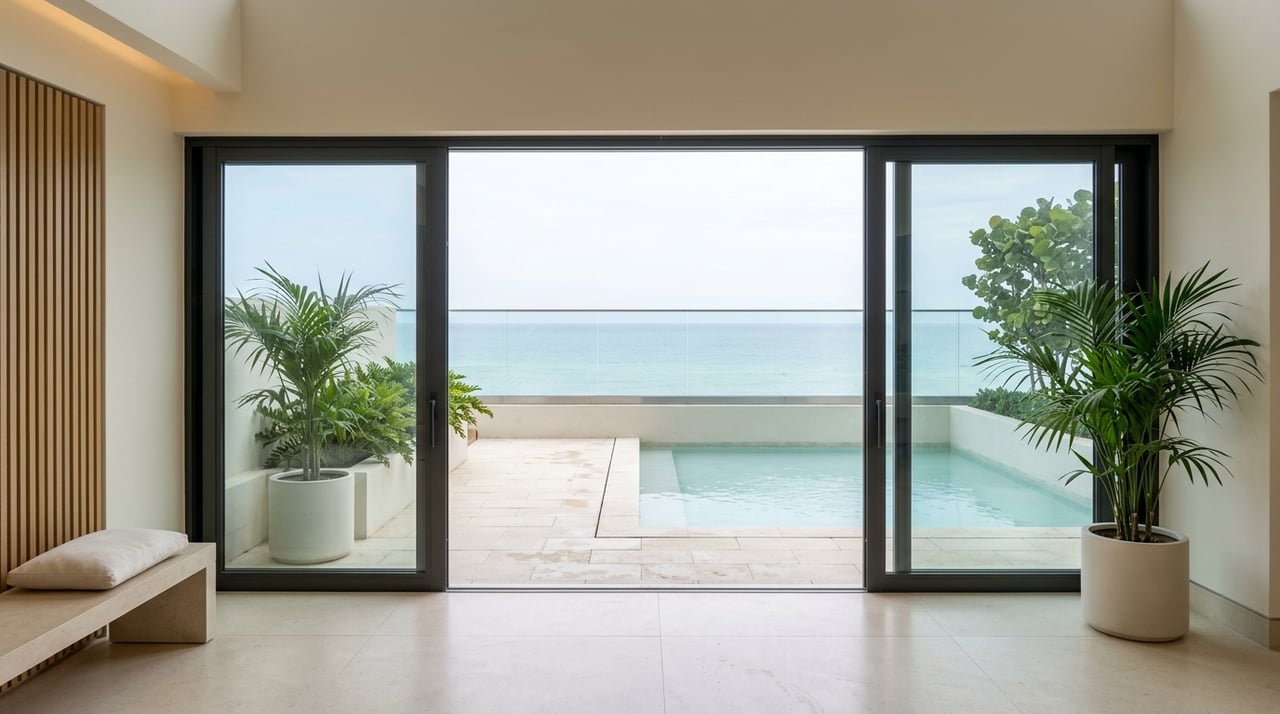
Sunny Isles vs South Beach Condos: Which Coast Fits?
Choosing between Sunny Isles Beach and South Beach is not just about picking a stretch of sand. It is about deciding how you want your oceanfront condo to live day to day, how much privacy you want, and whether your purchase is mostly lifestyle-driven, investment-minded, or both. If you are weighing these two iconic Miami-area coastal markets, this guide will help you compare the feel, housing stock, walkability, and rental considerations that matter most. Let’s dive in.
If you want a quick way to frame the choice, think of Sunny Isles Beach as a newer tower, resort-style market and South Beach as an iconic, walkable, urban beach market.
Sunny Isles Beach is a compact barrier-island city in northeastern Miami-Dade. City planning materials and visitor information describe a skyline shaped by high-rise condos and hotels, with a laidback and luxurious feel between the Intracoastal Waterway and the Atlantic Ocean. In practical terms, that often means a more residential rhythm centered on the building and the beach.
South Beach, by contrast, is the southern end of Miami Beach, stretching from South Pointe Park to 23rd Street. The area is closely tied to Miami Beach’s historic architecture, oceanfront promenade culture, and lively street scene. If you want an address that feels instantly recognizable and highly walkable, South Beach tends to deliver that experience.
For many oceanfront condo buyers, Sunny Isles stands out because of its concentration of contemporary high-rise buildings. The city itself emphasizes high-rise living as a defining part of its identity, and that shows up in the look and feel of the area.
If you picture arriving at a full-service tower, enjoying amenity-rich living, and spending most of your time between the residence, pool deck, and beach, Sunny Isles often fits that vision well. It tends to feel more vertical, polished, and self-contained.
Sunny Isles highlights two miles of white-sand beach, 22 beach access points, Newport Fishing Pier, and Samson Oceanfront Park. For buyers who want the ocean to be the main event, that matters.
The beach experience here often feels simpler and more focused on relaxation. You are less likely to be buying into a street scene and more likely to be buying into a resort-style coastal routine.
The city describes Sunny Isles as laidback and luxurious, and that lines up with how many buyers experience it. Dining options often lean toward polished, hotel-adjacent restaurants rather than nightlife-heavy corridors.
That calmer setting can be especially appealing if you want privacy, a second home atmosphere, or a residence that feels removed from the busiest parts of Miami Beach. It is often a better match for buyers who value quiet over constant activity.
South Beach offers one of the most recognizable coastal settings in South Florida. Miami Beach highlights the area’s collection of Art Deco, Mediterranean Revival, MiMo, and other architectural styles, with the Miami Beach Architectural District holding national historic recognition.
That gives South Beach a stronger sense of visual identity than many other condo markets. If you want your condo purchase to come with a clear sense of place, architecture, and cultural energy, South Beach has an edge.
South Beach is the more walk-centric choice. Miami Beach provides complimentary trolley service connecting South Beach, Mid Beach, and North Beach, and the Beachwalk creates a continuous oceanfront pedestrian route.
Lummus Park also adds to that daily convenience, with a beachfront path, bike lanes, public restrooms, and outdoor fitness areas. If you want to step outside and immediately be in motion, South Beach is usually the better fit.
South Beach is known for its concentration of restaurants, bars, beach clubs, and nightlife, especially around Ocean Drive. The same promenade energy that attracts visitors also appeals to buyers who want people-watching, dining variety, and a more active public environment.
That energy can be a major plus if you enjoy an urban beach lifestyle. It can also be a tradeoff if you prefer a more private or low-key setting.
This is one of the biggest lifestyle differences between the two markets.
Sunny Isles tends to feel more resort-oriented. The beach experience is often tied closely to your building, your immediate access point, and your day within the property’s amenities. Buyers who want a more contained oceanfront lifestyle often appreciate that format.
South Beach feels more public, active, and visually dense. With the Beachwalk, Lummus Park, and the Ocean Drive corridor, the beach is part of a broader outdoor scene. If you like movement, variety, and being in the center of the action, South Beach may feel more aligned with your lifestyle.
Both markets are active, but the numbers suggest slightly different profiles.
In Q1 2026, Miami Beach recorded 371 condo and townhome closed sales, with a median sale price of $510,000 and an average sale price of $1,278,800. Sunny Isles Beach recorded 161 closed sales, with a median sale price of $465,000 and an average sale price of $1,365,523.
That pattern suggests Miami Beach has greater transaction volume and a slightly higher median sale price, while Sunny Isles shows a more top-heavy luxury mix that lifts the average. For buyers, that can mean South Beach offers a broader set of transaction activity, while Sunny Isles may skew more strongly toward luxury tower pricing.
If rental income is part of your plan, the neighborhood name alone is not enough. In both Sunny Isles and South Beach, the most important questions often come down to city rules, zoning, and condo association documents.
Miami Beach says vacation or short-term rentals of less than six months and one day are prohibited in all single-family homes and in many multifamily buildings in certain zoning districts. Where rentals are permitted, owners may need zoning eligibility, a Business Tax Receipt, Resort Tax registration, and association approval or documentation.
That makes South Beach more of a patchwork market for short-term rental buyers. A building can look attractive on paper, but the actual rental path may be limited by zoning or condo rules.
Sunny Isles also regulates short-term rentals, but the framework is more licensing-driven. Units rented for six months or less need a city Short-Term Vacation Rental License, renewed annually, and the city requires items like proof of insurance, tax registrations, condo association consent or bylaws approval, and a local responsible party who can respond within an hour.
For investors, that can make Sunny Isles feel more straightforward, provided the building allows the use. The key point is the same in both markets: building rules can make or break the strategy.
Sunny Isles is often the stronger match if you are looking for:
This market can be especially appealing if you see your condo as both a personal retreat and a carefully chosen asset.
South Beach is often the better match if you want:
For some buyers, that combination is exactly the point. For others, it can feel busier than they want for everyday oceanfront living.
Both areas attract a strong second-home and vacation-home audience. MIAMI Realtors reported that Miami Beach ranked #2 among the largest vacation home markets in the United States, while Sunny Isles Beach ranked among South Florida’s top 1% largest vacation-home markets.
The same report states that 75% of sales across South Florida vacation-home markets were all-cash in 2025. That supports the view that both Sunny Isles and South Beach appeal strongly to cash buyers, second-home purchasers, and luxury consumers rather than only conventional mortgage-driven buyers.
If you are torn between the two, start with how you want to live when you are actually there. Do you want your oceanfront condo to feel like a private resort with a calmer rhythm, or do you want it to place you inside a highly walkable, always-on Miami beach setting?
Then look closely at the building itself. In both markets, your exact tower, association rules, and rental flexibility may matter more than the neighborhood label. Two condos on the same shoreline can offer very different ownership experiences.
If you want guidance that blends luxury market insight with real-world investor thinking, Isabela Faria can help you compare the right buildings, understand the lifestyle tradeoffs, and evaluate which oceanfront condo aligns with your goals.

Whether buying or selling, Isabela delivers service beyond comparison. Isabela works closely with each of her clients to find their ultimate property in the most premier locations, and secures the best deal. When listing a property, Isabela maximizes each property’s market value with her unmatched marketing strategy.
Let Me Know How I Can Assist You
ISABELA FARIA-NEWELL
7401 Wiles Rd., Suite #236 Coral Springs, Fl 33067