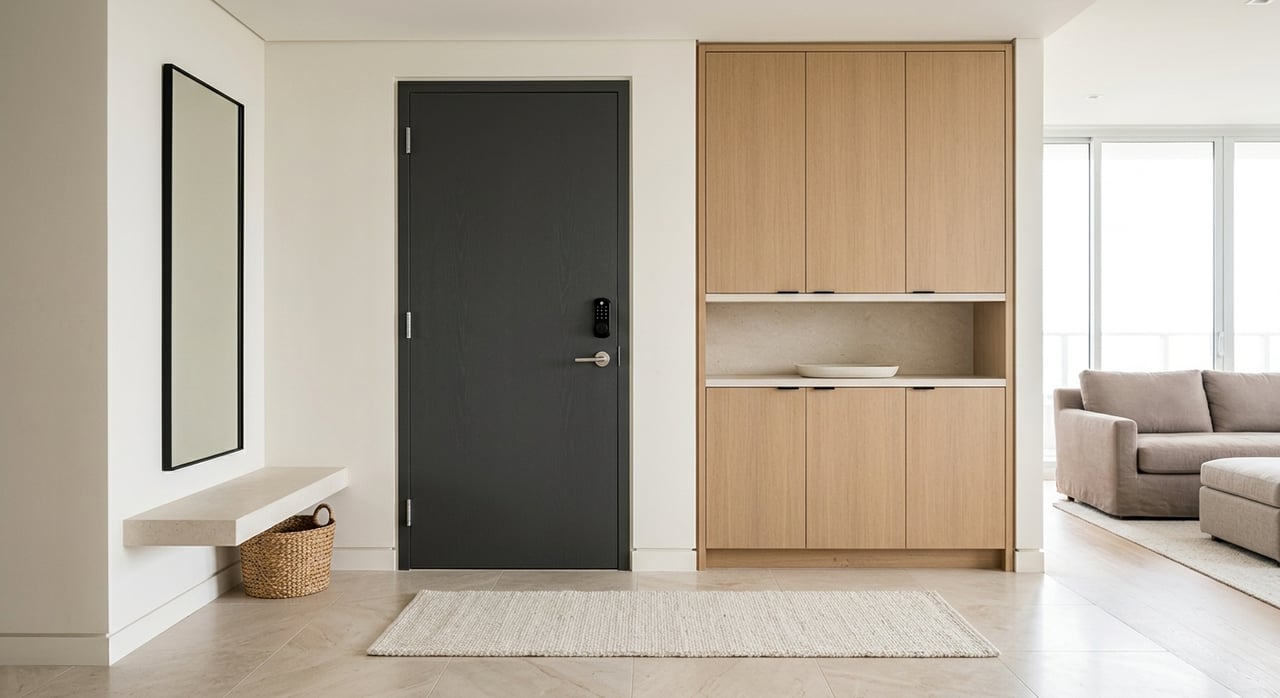
How to Choose a Downtown Miami Lock-and-Leave Condo
What if your Miami home could feel effortless instead of demanding? If you split time between cities, travel often, or want a second home that is easy to enjoy, a Downtown Miami condo can be a smart lock-and-leave base. The key is knowing which buildings truly support that lifestyle, what the carrying costs look like, and how local rules affect personal use or rental flexibility. Let’s dive in.
Downtown Miami is not just a business district that empties out after office hours. According to the Miami Downtown Development Authority, more than 100,000 people live downtown, and the district supports more than 155,000 jobs. For you, that means an active residential environment with services, movement, and day-to-day convenience even when you use the home only part time.
That matters because a lock-and-leave property works best when you can arrive and settle in quickly. In a real urban neighborhood, your condo does not feel disconnected the moment you walk back in. You step into a place that is already functioning as part of daily city life.
Walkability also supports the model. The Miami DDA points to ongoing public realm improvements and walkable streets, which can make short stays simpler and less car-dependent. If your goal is easy access to dining, errands, meetings, or entertainment without managing a large home, Downtown has practical appeal.
One reason Downtown Miami stands out is how easy it is to move around once you arrive. Miami-Dade says Metromover is free and runs seven days a week through Downtown Miami, Omni, and Brickell. That gives you a simple way to handle short trips without immediately relying on a car.
Regional access adds another layer. Brightline says MiamiCentral is in the heart of downtown and connects with Metrorail, Metromover, and Tri-Rail. Brightline also says MiamiCentral is about 8 miles from Miami International Airport, which helps if you fly in for quick business or leisure stays.
For domestic and international buyers alike, this setup can reduce friction. You can land, reach downtown, and move through the urban core with fewer logistics. That is a real advantage when your home is meant to support flexibility.
When buyers picture a second home, they often focus first on views, finishes, and amenities. Those features matter, but for a lock-and-leave condo, operations often matter more than décor. A beautiful unit is helpful, but a well-run building is what makes part-time ownership feel easy.
Look closely at basics like controlled access, on-site management, guest procedures, parking, and how the building functions when owners are away. The City of Miami’s short-term rental and lodging framework highlights just how important these systems are by specifically addressing front-desk operations, 24-hour contact, guest access control, and housekeeping in its operational management standards.
Even if you never plan to run the unit like a hotel-style stay, that framework shows what experienced owners already know. Smooth building operations can shape your day-to-day experience more than a flashy amenity deck. If the property is meant to be low-friction, the building itself has to support that goal.
Before you buy, it helps to get clear answers to a few practical questions:
These are not small details. They often determine whether your condo feels like a reliable home base or another thing you need to manage from afar.
Even in a transit-friendly location, parking deserves careful review. You may not need a car every day, but you may still want one for regional travel, beach days, or meetings outside the urban core. That is why parking rights should be confirmed early, not assumed.
Miami-Dade’s vacation rental standards require compliance with parking rules and written guest notice about vehicle parking. While those standards apply to short-term rental use, they also underline a broader point for second-home buyers. Parking logistics can affect how smoothly the property works for you and anyone staying there.
A unit with unclear parking rights can create headaches fast. If the building offers valet, limited guest parking, or separate parking agreements, you will want those details upfront before making ownership plans around convenience.
Many buyers want a second home that offers flexibility. You may plan to use the condo personally most of the year, then rent it occasionally when you are away. That can sound simple, but in Downtown Miami, the legal and building-level rules matter just as much as the unit itself.
The City of Miami uses the term Apartment/Condo Rental Lodging for short-term rental and lodging uses. Its guidance says transient use means a unit rented more than three times in a year for periods of less than 30 days. Miami-Dade defines a short-term vacation rental as a condo, co-op, or apartment rented to a transient occupant for less than 30 days or one calendar month, whichever is less.
That means your intended use case needs to be defined clearly. Are you buying a true second home, a long-term hold, or a hybrid property that may host short stays? The answer affects compliance, costs, and whether the building is even a fit.
One of the most important buyer questions is simple: Does the building actually allow the use you want? A tower may look ideal on paper and still restrict short-term occupancy through its declaration or bylaws.
Before you move forward, confirm:
This step is especially important if you are buying with income flexibility in mind. A lock-and-leave base works best when the building already behaves like a well-run urban residence, not when you are depending on a speculative rental scenario that may not fit the rules.
A Downtown Miami condo can offer convenience, but you still need to underwrite ownership carefully. In Florida, reserve funding has become a major part of the condo picture. Under Chapter 718, residential condominium associations in buildings that are three habitable stories or higher must complete a structural integrity reserve study at least every 10 years, covering items such as the roof, structure, fire protection, plumbing, electrical systems, waterproofing and exterior painting, windows and exterior doors, and other deferred-maintenance items over $10,000.
For budgets adopted on or after December 31, 2024, unit-owner-controlled associations that must obtain a SIRS generally may not vote to waive or underfund reserves for those listed items. In practical terms, that means reserve obligations can have a direct impact on monthly ownership costs.
Florida law also says condominium assessments are made at least quarterly, and nonemergency special assessments or rule changes related to unit use require 14 days’ notice before the board meeting. If milestone inspections apply, the association must arrange them and cover costs tied to the portions of the building it maintains. For you, the takeaway is simple: a condo with low dues is not automatically the better value if deferred maintenance or future assessments are sitting in the background.
Ask for a clear picture of the association’s financial health, including:
This is where lock-and-leave buyers need discipline. A condo should feel operationally easy, but it also needs to remain financially comfortable when building obligations come due.
If you want to use your condo as a compliant short-term rental, carrying costs can rise quickly. Florida imposes a 6 percent transient rentals tax on rentals of condos and similar accommodations. Miami-Dade also says short-term rental taxes apply to rentals of 6 months or less, and properties inside municipalities must follow municipal rules too.
Miami-Dade says responsible parties must obtain a Certificate of Use before listing a short-term vacation rental. For properties inside a municipality, the owner must also hold both city and county receipts to remain compliant. Miami-Dade currently lists a CU fee of $139.44, plus an inspection fee of $97.84 and a $17.42 surcharge, and says the certificate must be renewed annually at the same cost.
Those numbers may not seem dramatic on their own, but they are part of a larger operating picture. If your plan depends on occasional short stays generating income, it is important to budget for compliance, taxes, and building rules from the start.
Not every owner wants transient use. If your plan is to lease the condo for a longer term when you are not using it, the framework changes. Florida law says a bona fide written lease for continuous residence longer than six months is not subject to the transient rental tax.
That can reduce the compliance burden significantly compared with short-term rental use. It also means some buyers may prefer a building that works well as a second home and long-term lease asset, rather than one designed around frequent guest turnover. The right answer depends on how you plan to use the property over time.
Part-time and international buyers should be careful with property tax assumptions. Miami-Dade’s Property Appraiser says exemptions are intended for permanent residents of a primary home, and the office flags a claimed homestead on a property that is rented or not the owner’s permanent residence.
In other words, a second home usually should not be modeled with primary-residence tax benefits. This can make a meaningful difference in your annual carrying costs. It is a small planning detail that can have a big effect on the numbers.
A Downtown Miami condo sits in the middle of two other options. Compared with a hotel, it offers ownership continuity, control over your space, and the ability to keep furnishings and personal items in place. Compared with a long-term rental, it usually gives you more freedom over timing and personal use, but it also adds association governance and building-related cost exposure.
That does not make condo ownership better or worse. It simply means you should choose it for the right reasons. If you want a personal Miami base that feels consistent, private, and easy to return to, a condo can make a lot of sense when the building and budget align.
A lock-and-leave condo in Downtown Miami tends to work best if you want:
It tends to work less well if you are relying on loose assumptions about short-term rental use, underestimating HOA exposure, or choosing a building based only on finishes and amenities. In this category, the back-end details matter as much as the view.
The strongest lock-and-leave choices are usually the ones where your lifestyle goals and the building’s actual rules already match. That is what creates ease, and ease is the whole point.
If you are weighing Downtown Miami as a second-home base, the right guidance can save you time and help you avoid expensive mismatches. Isabela Faria can help you evaluate buildings, ownership costs, and rental flexibility so you can choose a condo that fits the way you actually plan to live.


Whether buying or selling, Isabela delivers service beyond comparison. Isabela works closely with each of her clients to find their ultimate property in the most premier locations, and secures the best deal. When listing a property, Isabela maximizes each property’s market value with her unmatched marketing strategy.
Let Me Know How I Can Assist You

ISABELA FARIA-NEWELL
7401 Wiles Rd., Suite #236 Coral Springs, Fl 33067