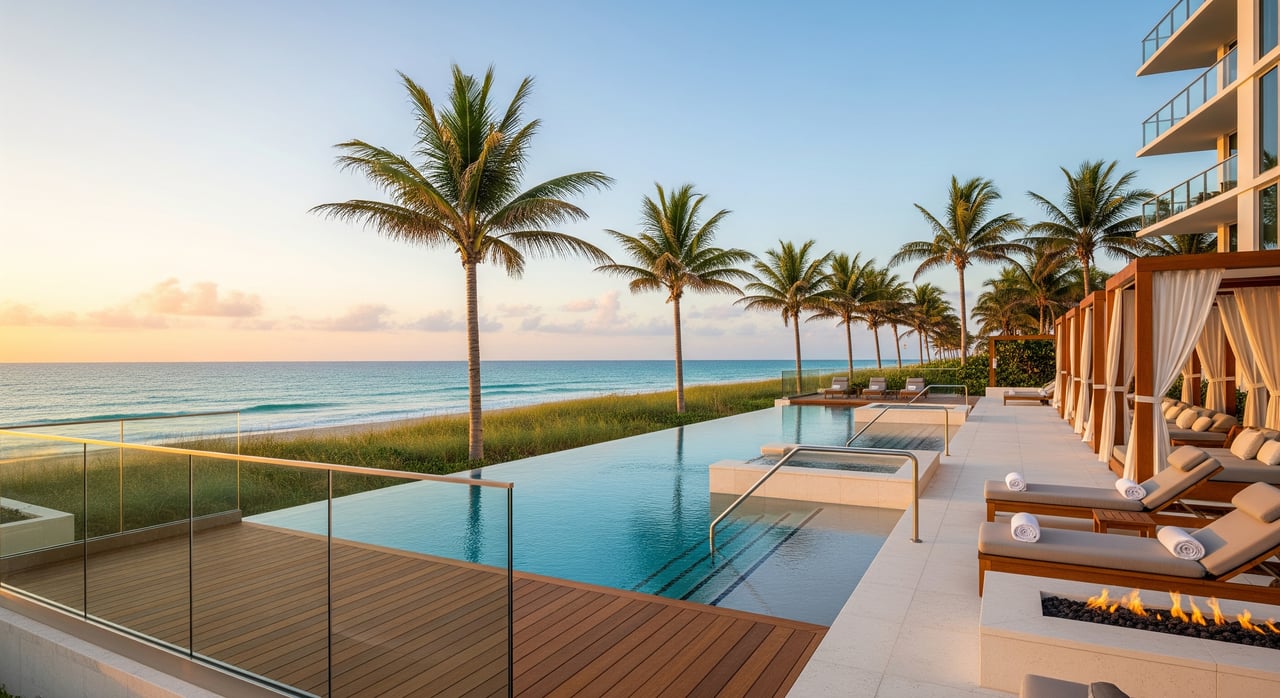
What to Expect from Sunny Isles Oceanfront Condo Amenities
Are you picturing coffee on your balcony, towel service on the sand, and dinner sent up from a chic club downstairs? If you are exploring oceanfront condos in Sunny Isles Beach, you will want a clear sense of how amenities actually work day to day. In this guide, you will learn what services are common, what is typically included, what is pay‑per‑use, and how those choices affect monthly fees. Let’s dive in.
Sunny Isles Beach sits within the Miami–Miami Beach–Kendall metro in Miami‑Dade County. Buildings range from ultra‑luxury, resort‑style towers to older high‑rises and boutique properties. Each offers a different balance of services, privacy, and cost.
At the top end, you will find new or branded residences with full resort programs. Think curated beach clubs, multiple food and beverage venues, staffed spas, and concierge service. Architect‑led super‑luxury towers may add unique features like mechanical parking systems. Older or traditional high‑rises usually offer a pool, fitness room, and direct beach access with fewer staffed services. Boutique buildings trade breadth of amenities for privacy and lower recurring costs.
One local nuance matters. Florida’s public trust rules mean the dry sand to the mean high‑tide line is generally public. Buildings can create private or semi‑private setups with chairs, umbrellas, and service zones, but complete shoreline exclusivity is not possible. You should expect a curated resident area within a public beach context.
Beach days are a core part of life here. In luxury towers, you will typically find chaise lounges, umbrellas, towel service, attendants, beachfront showers, and access paths. Shaded cabanas may be complimentary or rentable. Some properties add water sports storage or rental.
Service delivery varies. Many associations contract a dedicated beach operator or run an in‑house beach club. Daily chair and umbrella setup can be included in the maintenance fee, while extras are usually user‑pay. Food and beverage at your umbrella, private cabana service, equipment rentals, and private events on the sand often carry per‑use charges.
Season and permitting can shape operations. Staffing is often heavier in peak months. Ask how the building manages public access points and what parts of beach service are included versus billed per visit.
Buyer takeaway: Confirm what beach services come with your monthly fee, which items are billed per use, and whether there is a separate beach‑club membership or special assessment tied to the beach program.
Wellness programs range from basic gyms to full spa ecosystems. In newer and branded towers, you may see treatment rooms, steam and sauna, hydrotherapy, Pilates and yoga studios, and large fitness centers with group classes. Some add recovery technology, like infrared or cryo facilities.
Operator models differ. Hotel‑branded or luxury spa partners often run the program and food and beverage. In other buildings, the association manages the facility or hires a local boutique operator. Group classes are sometimes included, while massages, private training, and salon services are fee‑for‑service.
Newer towers often use resident apps for booking. Hours and priority rules matter if you plan frequent use, so you will want clarity on peak‑time access.
Buyer takeaway: Ask exactly which wellness services are included in your maintenance fee, which are billed per session, and how reservations work for residents.
You will see 24/7 valet and concierge in many luxury buildings. Expect covered garages, secured resident spaces, guest parking bays, and growing access to EV charging. Some properties even offer on‑site car washing or detailing.
Costs depend on the model. In some associations, valet and one or more spaces are covered by the monthly fee. Others charge separately or use a parking assessment for an allocated space. Architecturally distinct towers may use mechanical or robotic systems, which add operating complexity and higher maintenance costs.
Guest policies and space counts differ between older and newer buildings. If you host often, ask about guest parking limits and any blackout periods.
Buyer takeaway: Verify whether parking is deeded or assigned, if valet is mandatory, EV charging availability and pricing, guest parking rules, and any known or planned garage capital projects.
Dining enhances daily convenience. Offerings can include a residents’ club or dining room, a fine‑dining restaurant, a poolside bar and grill, private dining rooms, and in‑residence dining or room service in some hotel‑connected properties.
Operations are often handled by hotel or third‑party restaurateurs. Some buildings run a residents‑only club with membership fees and partial subsidies. Most associations that host a venue fund staffing and common‑area costs through the operating budget, while actual meals, private events, and special services are paid by the user.
You should also ask about membership minimums. Some operators require a minimum annual spend or separate dues, which affects your overall cost of ownership.
Buyer takeaway: Learn who runs the dining program, whether there are membership fees or minimums, and how long the operator contract runs.
Family‑forward buildings can feature family pools and lap pools, kids’ splash pads, supervised clubs, teen rooms, game rooms, theaters, and multi‑use courts. Larger towers may run supervised programs in‑house or with a childcare partner. Smaller or boutique buildings often provide play spaces without staffed programs.
Supervised programs typically charge per session because of staffing and liability. Age limits, sign‑up windows, and ratios are common. Private event policies for birthdays or gatherings vary by building.
Buyer takeaway: Confirm age policies, staffing ratios, whether childcare is in‑house or via contractor, and how the building handles private family events.
Monthly maintenance or HOA assessments are usually billed per square foot or by percentage interest. Amenity‑rich towers with 24/7 staffing, full spa teams, and multiple food and beverage venues carry higher operating budgets, which translates to higher monthly fees. Traditional or older towers tend to charge less because they run leaner programs.
Reserves and special assessments also matter. Complex systems such as pools, saltwater treatment, spas, and mechanical parking require robust reserves. Reviewing the most recent reserve study can help you anticipate long‑term capital needs.
Inclusions vary by building. Common inclusions cover staffing for common areas, basic common utilities, building insurance policies arranged by the association, and security. User‑pay items often include spa treatments, private cabanas, selected fitness classes, nanny or childcare services, certain parking extras, and specialty food and beverage.
Buyer takeaway: Ask for a clear list of what your monthly fee covers, which items are pay‑per‑use, and the timing and history of any special assessments.
It helps to do the math. If an association charges $1.25 per square foot per month, a 2,000 square foot residence would pay $2,500 monthly in maintenance. If fees are $1.50 per square foot, the same home would pay $3,000 a month. This simple calculation lets you compare buildings with different amenity levels and budget structures.
Use the same approach to model your total cost of ownership with any known membership dues, parking assessments, and typical pay‑per‑use spend for your lifestyle.
Oceanfront exposure raises insurance complexity. Building insurance premiums can be higher along the coast, and market conditions may increase assessments. Past storm events can drive special assessments for repairs or push premiums up.
When you review a building, ask for the insurance certificates, storm claims history, and any flood or wind‑mitigation features. Also check recent capital repairs and planned upgrades that improve resilience.
Buyer takeaway: Look for a well‑funded reserve plan, clear mitigation measures, and a track record of transparent communication about storm impacts.
Long‑term contracts for beach service, valet, spa operations, or restaurant partners can stabilize service quality. They can also lock in cost escalations over time.
Ask for vendor contract terms, renewal timelines, and termination clauses. Understanding any subsidies or minimums tied to these agreements will help you gauge how sustainable the service level is.
Buyer takeaway: Review vendor contracts during due diligence to anticipate cost trajectory and service stability.
You will notice a few clear styles across Sunny Isles Beach:
These categories are illustrative of what you will see in the neighborhood. Always verify current association documents and contracts for specifics.
Do your homework early. Request these documents and ask targeted questions so you know exactly what you are getting.
Documents to request
Questions to ask
Red flags to watch
Start with your daily routine. If you value staffed beach service, in‑building dining, and a full spa calendar, a resort‑style or branded tower may fit best, with higher recurring fees. If privacy and lower monthly costs matter more, a boutique or traditional high‑rise could be the right choice.
Balance lifestyle and budget by mapping your likely usage. List what you will use weekly, what you will enjoy monthly, and what you can live without. Then compare two or three buildings side by side using their per‑square‑foot fees, vendor contracts, and reserve studies.
When you want a local, detail‑driven guide to walk you through building personalities, documents, and day‑to‑day service quality in Sunny Isles Beach, reach out to Isabela Faria to Schedule a Consultation.



Whether buying or selling, Isabela delivers service beyond comparison. Isabela works closely with each of her clients to find their ultimate property in the most premier locations, and secures the best deal. When listing a property, Isabela maximizes each property’s market value with her unmatched marketing strategy.
Let Me Know How I Can Assist You

ISABELA FARIA-NEWELL
7401 Wiles Rd., Suite #236 Coral Springs, Fl 33067